As foreclosures near me take the spotlight, this introduction aims to draw readers in with a wealth of valuable insights, promising a rewarding journey through the realm of real estate intricacies.
The following paragraph will delve into the specifics of the topic, shedding light on various aspects of foreclosures near you.
Understanding Foreclosures
Foreclosures in the real estate context refer to the legal process by which a lender takes possession of a property when the borrower fails to make mortgage payments. This allows the lender to sell the property to recoup the unpaid loan amount.Foreclosures can occur due to various reasons, including job loss, divorce, medical emergencies, or financial mismanagement.
When a homeowner is unable to meet their mortgage obligations, the lender may initiate the foreclosure process to recover the debt.
Common Reasons for Foreclosures
- Job loss or reduction in income
- Divorce or separation
- Medical emergencies and unexpected expenses
- Adjustable rate mortgages with rising interest rates
- Financial mismanagement or overspending
Process of Foreclosure
- The borrower misses mortgage payments
- Lender sends a notice of default to the borrower
- Foreclosure proceedings begin, and the property is auctioned off
- If the property does not sell at auction, it becomes real estate owned (REO) by the lender
- The lender sells the property to recover the outstanding loan amount
Types of Foreclosures
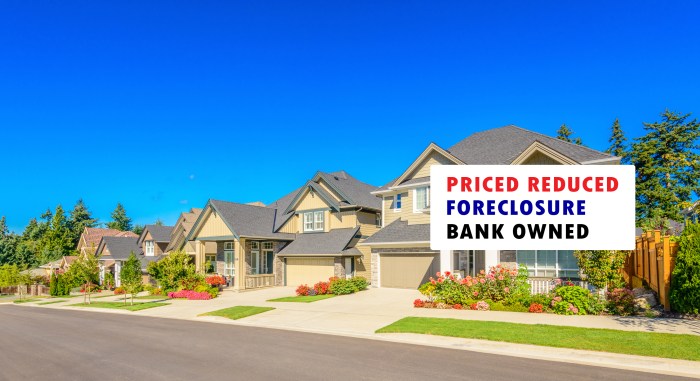
Foreclosures come in different types, each with its own unique process and implications. Understanding the differences between these types can help you navigate the real estate market more effectively.
Judicial vs. Non-Judicial Foreclosures
In judicial foreclosures, the lender must go through the court system to obtain a foreclosure order. This process can be lengthy and costly. Non-judicial foreclosures, on the other hand, do not require court intervention and are typically faster and less expensive for lenders.
Pre-foreclosure
- Pre-foreclosure refers to the period after a homeowner has received a notice of default but before the property is sold at auction.
- During this time, the homeowner may still be able to negotiate with the lender, sell the property, or refinance to avoid foreclosure.
- Buyers can sometimes purchase pre-foreclosure properties directly from the homeowner before they go to auction.
Auction
- Foreclosure auctions are public sales where the property is sold to the highest bidder, often at a significant discount.
- Buyers must have the funds available immediately and are usually not able to inspect the property beforehand.
- Auction sales are final, and buyers typically cannot back out of the purchase.
Bank-Owned Properties
- Bank-owned properties, also known as real estate owned (REO) properties, are homes that have failed to sell at auction and have reverted back to the lender.
- These properties are typically listed for sale on the open market by the bank or a real estate agent.
- Buyers can often negotiate the price and terms of sale for bank-owned properties.
Searching for Foreclosures Near Me
Finding foreclosure listings in your local area can be a challenging task, but with the right approach, you can uncover valuable opportunities. Here are some tips on how to search for foreclosures near you:
Importance of Working with a Real Estate Agent Specialized in Foreclosures
When looking for foreclosed properties, it is crucial to work with a real estate agent who specializes in handling such transactions. These agents have the expertise and experience to navigate the complexities of foreclosure properties and can help you find the best deals in your area.
They can also provide valuable insights and guidance throughout the purchasing process.
Factors to Consider When Looking for Foreclosed Properties Nearby
- Location: Consider the location of the foreclosed property and its proximity to amenities, schools, and transportation options.
- Condition of the Property: Assess the condition of the property to determine the potential costs of repairs and renovations.
- Market Conditions: Evaluate the current real estate market conditions in your area to understand the competition and pricing trends for foreclosed properties.
- Financing Options: Explore financing options available for purchasing foreclosed properties, such as loans specifically designed for distressed properties.
- Legal Considerations: Be aware of the legal implications of purchasing a foreclosed property and ensure that all necessary due diligence is conducted before making an offer.
Risks and Benefits of Buying Foreclosures
Foreclosed properties can offer great opportunities for buyers, but they also come with certain risks that need to be considered. It’s important to weigh the pros and cons before deciding to purchase a foreclosure.
Risks of Buying Foreclosures
- Uncertain Property Condition: Foreclosed properties are often sold as-is, which means there may be hidden issues or damages that are not immediately apparent.
- Legal Complications: The foreclosure process can be complex, and there may be legal challenges or complications that arise after the purchase.
- Limited Inspection Period: Buyers may have limited time to inspect the property before making a purchase, increasing the risk of unforeseen problems.
Benefits of Buying Foreclosures
- Potential Cost Savings: Foreclosed properties are typically priced below market value, allowing buyers to purchase a home at a lower price.
- Investment Opportunity: Buying a foreclosure can be a good investment opportunity, especially if the property is in a desirable location or has potential for renovation.
- Quick Acquisition: Foreclosed properties may be available for a faster acquisition process compared to traditional home sales.
Strategies for Minimizing Risks
- Get a Home Inspection: Hire a professional inspector to thoroughly examine the property for any issues before making a purchase.
- Research the Property: Conduct thorough research on the property’s history, including any liens or outstanding debts.
- Work with a Real Estate Agent: A real estate agent with experience in foreclosures can help navigate the process and provide valuable guidance.
Financing Options for Foreclosed Properties
When it comes to buying a foreclosed home, there are several financing options available to potential buyers. It’s important to understand the differences between traditional mortgage loans and specialized loans designed specifically for foreclosures, as each option comes with its own set of implications.
Traditional Mortgage Loans
Traditional mortgage loans are the most common way to finance a home purchase, including foreclosed properties. These loans typically require a down payment, good credit score, and income verification. While they offer competitive interest rates, they may have stricter requirements compared to specialized foreclosure loans.
Specialized Loans for Foreclosures
Specialized loans for foreclosures are specifically designed to help buyers finance the purchase of a foreclosed property. These loans may have lower down payment requirements, more flexible credit score criteria, and faster approval processes. However, they may come with higher interest rates to offset the added risk of financing a distressed property.
Implications of Financing a Foreclosed Property
Financing a foreclosed property through different methods can have various implications. Traditional mortgage loans may offer lower interest rates but require stricter qualifications, while specialized foreclosure loans may provide more flexibility but come with higher costs. It’s essential for buyers to weigh the pros and cons of each financing option carefully before making a decision.
Last Recap
Concluding our discussion on foreclosures near me, this summary encapsulates key points and leaves readers with a sense of fulfillment, having gained a deeper understanding of this complex subject.
Expert Answers
What are the common reasons for properties going into foreclosure?
Common reasons include job loss, medical emergencies, divorce, and excessive debt.
How can I find foreclosure listings in my local area?
You can search online on real estate websites, attend foreclosure auctions, or work with a real estate agent specializing in foreclosures.
What are the risks associated with buying foreclosed properties?
Risks include potential hidden damages, liens on the property, and lengthy legal processes.
What financing options are available for purchasing foreclosed homes?
Options include specialized loans for foreclosures, traditional mortgage loans, and cash purchases.